Andrea Mantegna: 170+ Italian Renaissance Paintings
Category: Kindle Store,Kindle eBooks,Arts & Photography
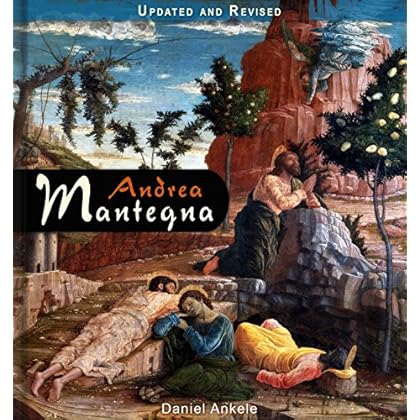
Andrea Mantegna: 170+ Italian Renaissance Paintings Details
(Revised 9/2015 - 170+ Larger (HD) Italian Renaissance paintings with chronological annotations and interesting facts page. Formatted for all Kindle devices, Kindle for iOS and Android Tablets.)ANDREA MANTEGNA Art Book contains 170+ Early Renaissance Reproductions of Frescoes, Portraits, Religious and Mythical Scenes with annotations and interesting facts page below. Book includes Chronological Table of Contents, Top 50 Museums of the World, and is formatted for all Kindle devices, Kindle for iOS and Android Tablets (use rotate and/or zoom feature on landscape/horizontal images for optimal viewing).BORN: c1431 Padova province (Veneto, Italy).DIED: September 13, 1506 in Mantua (Mantova province, Lombardy, Italy).MOVEMENT: Italian RenaissanceINTERESTING FACTS:§ Mantegna was an Italian Renaissance painter of well regarded influence, who was known for his visual experiments in perspective and spatial illusion.§ His work influenced great painters of the time, including German artist Albrecht Dürer and Italian painters Leonardo da Vinci and Giovanni Bellini.§ At the age of eleven, Mantegna became the apprentice of Francesco Squarcione, a Paduan painter.§ Mantegna’s first work was the altarpiece for the church of Santa Sofia in 1448, and decorations for the Ovetari Chapel in the church of Eremitani. Most of these works were lost during bombings in WWII.§ In 1453, Mantegna painted two frescoes of Saints at the entrance of the Church of Sant’Antonio and the Church of S. Giustina of Saint Luke.§ In 1453, Mantegna married the daughter of Italian painter Jacopo Bellini who had been mentoring him.§ In 1459, he painted a grand altarpiece for the church of San Zeno Maggiore, a Madonna and angels with four saints. He then painted several masterpieces of the Gonzaga family, in what is known today as the Camera degli sposi.§ In 1460, he was made court painter to the Marquis Ludovico II Gonzaga of Mantua.§ In Rome, 1488, he completed frescoes commissioned by Pope Innocent VIII for the Vatican.§ In 1495, Giovan Francesco II Gonzaga commissioned Mantegna to paint the Madonna of the Victory, to commemorate his victory at the Battle of Fornovo.§ In 1497, he painted the Parnassus, a picture celebrating the marriage of Isabella d'Este to Francesco Gonzaga in 1490, and Wisdom Overcoming the Vices (1502) for Isabella's studiolo.§ Andrea Mantegna died on September 13, 1506. A funerary chapel in the church of S. Andrea at Mantua was dedicated to Mantegna’s memory. Decorated with frescoes, including a dome painted by Correggio with paradise symbols related to Mantegna’s Madonna of the Victory, was finished in 1516. No other 15th-century artist was honored by having a funerary chapel dedicated to him in the major church of the city where he worked.


Reviews