Camille Pissarro: Letters to His Son, Lucien
Category: Books,Arts & Photography,History & Criticism
Camille Pissarro: Letters to His Son, Lucien Details
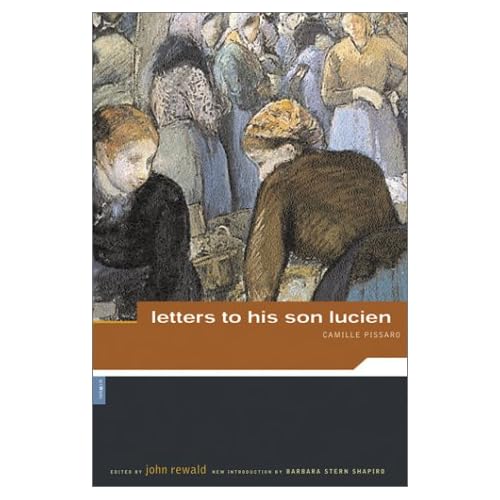
Pissarro's weekly letters to his son Lucien, covering the dramatic period of Impressionism from 1883 to the painter's death in 1905, form what might be called a diary of the Impressionist school. In these wise, reflective, warmhearted missives, Pissarro, called the father of Impressionism, presents the growth and development of Impressionism and the struggles of its practitioners, as well as pungent and evocative observations on the politics, literature, and daily life of France in the late 19th century. But more than anything, these letters reveal an artist elucidating the inner resources of his craft: Lucien Pissarro, a contemporary of van Gogh, Seurat, and Toulouse-Lautrec, was himself a student of painting, and it was to the young artist above all that his father communicated the unique and illuminating perspectives on art contained in these documents. Brilliantly annotated and introduced by the renowned art historian John Rewald, and featuring a new preface by Barbara Stern Shapiro, Curator for Special Projects at the Museum of Fine Arts, Boston, this edition of the Letters restores to print one of the most intimate and enjoyable views ever offered of the Impressionist period.


Reviews
I doubt if Camille Pissarro (CP) would have wanted his personal letters published, but today it seems to be in vogue to expose oneself to the world. Of course, just all the parties mentioned in his letters are deceased so perhaps our gain from reading the letters is justifiable since they expose many of his concerns, jealousies and political ideas. What is prevasive is CP constant need for money to support his large family at a time when his art was still not in demand until the last few years of his life. While living in England Lucien Pissarro, his eldest son, follows in his father's footsteps wanting to be a professional artist but must depend on his father for both financial and artistic support. Pissarro's criticism of Gauguin and Signac seems too harsh today but back then painting was supreme in the visual arts and everyone was a critic. CP was jewish and an anarchist who wrote Lucien describing the antisemitic scene (Dreyfus affair and Zola's trial) and the conservative community and government reaction to the arts and social issues of his time.What I enjoyed reading were his comments on some of his paintings and his interaction with galleries and collectors. Unfortunately many of the paintings referred to are not illustrated or if so they are not in color. Highly recommended for the serious art historian especially those interested in French art at the end of the 19th Century.